
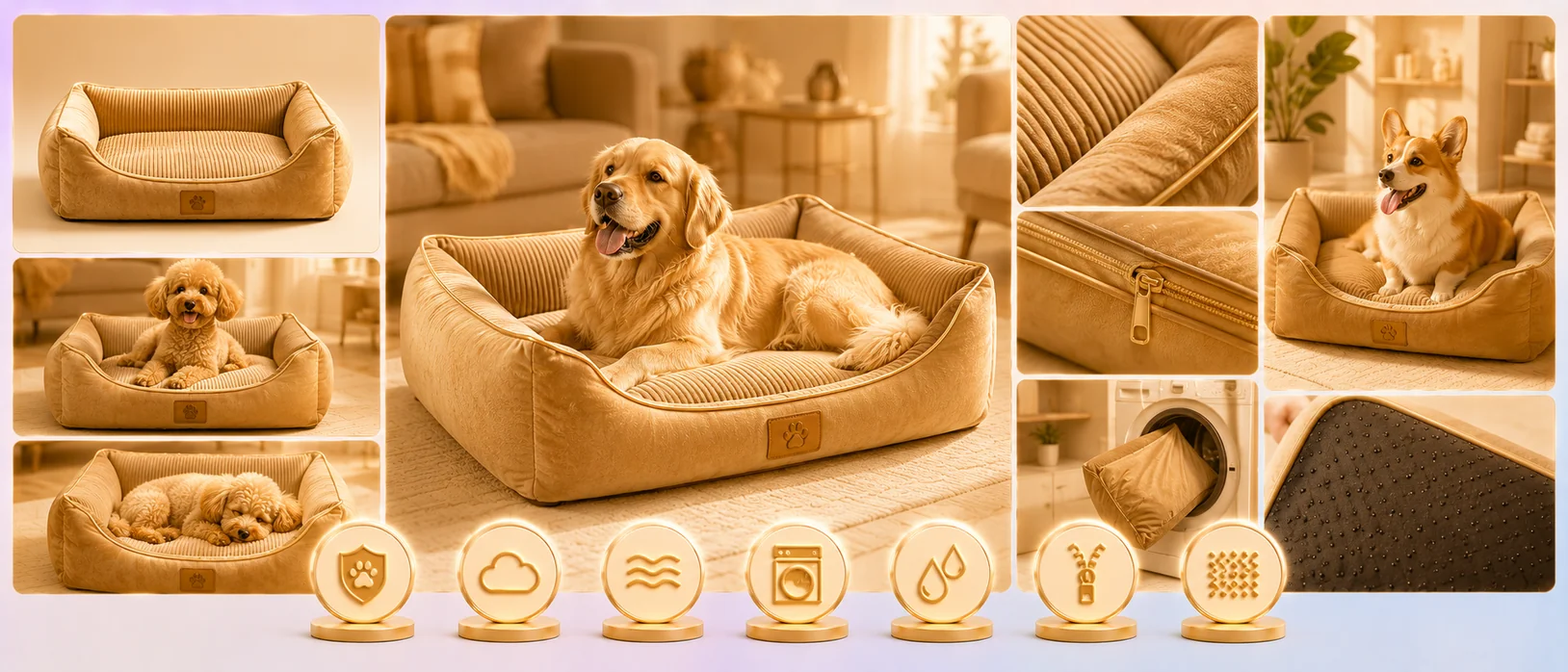
Pet is a copycat machine. You launch a dog brush that works, it ranks, and within weeks there are a dozen identical listings — same private-label product from the same supplier, same photos, same price, often undercutting you. The product is no longer the differentiator, because your competitors are selling the same product. The listing is the only thing that's yours.
"Competitor just refreshed and now ranks above me."
In Pet, the barrier to copying is near zeroAnyone can source your exact SKU. What they can't copy in 20 minutes is a listing engineered to convert — one that out-clicks and out-sells theirs on the same product. That's your moat in a flooded category. Here's how to build it.
Why Pet Is a Copycat Category (and Why Your Listing Is the Only Defense)
Three forces make Pet uniquely brutal:
- Supplier-shared products. Most Pet PL products come from a handful of factories. Your competitor likely sells the identical item. Product quality can't differentiate you when the product is literally the same.
- Low copy barrier. A competitor can clone your listing concept, undercut your price, and ride your keyword research within weeks. The category churns constantly.
- Emotional, trust-driven buyers. Pet owners are buying for a family member. They want to trust the brand and see the product working on a pet like theirs. That emotional layer is a conversion driver most generic listings completely ignore.
The strategic reality: in Pet, you can't defend with product and you can't win a price war with copycats who undercut. You defend — and win — with a listing that converts so much better that you hold rank and margin even when a cheaper clone sits right next to you. The listing is the moat.
"Look like a brand, not a no-name."
The job-to-be-done in Pet specificallyThe seller who looks like a real brand beats the wall of identical no-name clones, because the buyer chooses the one they trust — and trust is signaled visually.
The Competitor Teardown: You vs the Copycat
Open your top keyword on mobile. Put your tile next to the three clones selling your exact product. The buyer is comparing all of you in ~1.2 seconds. Here's what the winner does that the clones don't:
- Signals "real brand," not no-name. Branded packaging, consistent visual system, confident presentation — the buyer's eye filters for legitimacy.
- Shows the product on a pet like theirs. Scale and use, instantly. A brush sized against an actual dog, a bed with a dog in it, a feeder at real scale.
- Resolves trust fast. Safety, materials, "won't hurt my pet" — the emotional objection that's unique to this category.
- Breaks the wall. One cue that stops the scroll where the identical clones blur together.
When you sell the same product as your competitor, the listing comparison is the purchase decision. The buyer isn't choosing a better dog brush — they're choosing the listing that makes them more confident. Win that and you win the sale, on identical product, at a defensible price.
What Makes Pet Buyers Click and Convert
Pet has category-specific conversion drivers. Build to them:
TOS-compliant (pure white, 85%+ fill, no text/badges), mobile-readable. In Pet, the main has to signal real brand and telegraph the product's quality/scale through the shot itself — so it stands out from the identical no-name tiles. This earns the click before price even enters the buyer's mind.
The single highest-converting Pet image: the product in use on an actual pet, at correct scale. A harness on a dog of the stated size, a brush mid-stroke on a long-haired cat, a bed with a pet curled in it. The buyer needs to see it working on a pet like theirs — this is where they decide "yes, this is right for my dog."
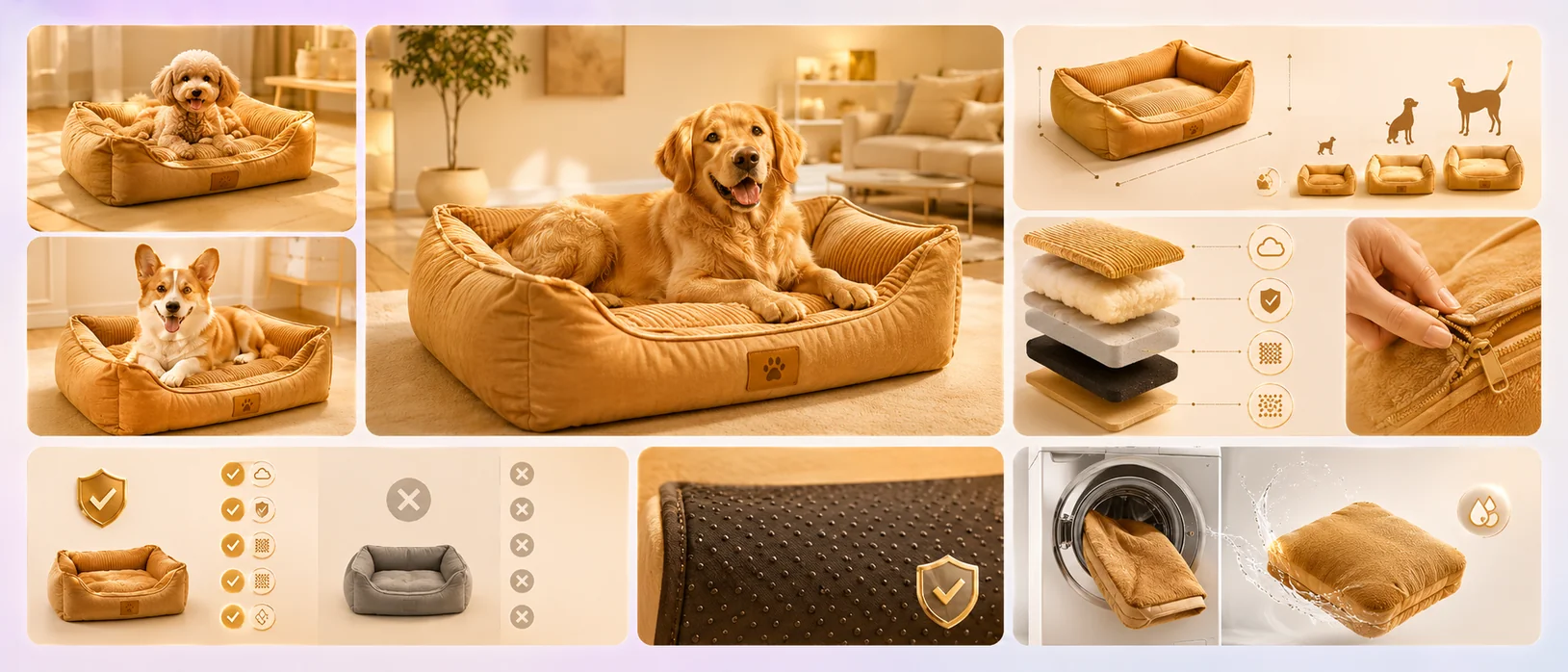
Sizing is the #1 Pet objection and return driver: "will it fit my dog?" Show the size chart, the breed/weight range, the dimensions against a recognizable reference. "For dogs 40–80 lbs." Getting this right lifts CVR and slashes the returns that wreck account health and BSR.
Pet's unique objection: "is this safe for my pet?" Show non-toxic materials, no sharp edges, secure construction, quality standards. This is the trust image that closes the protective pet owner — and it's where generic listings, which never address safety, leave the sale on the table.
A comparison infographic (no named competitors — TOS): your materials, durability, safety features, or design vs the value tier. When the buyer can see why you're worth more than the identical-looking clone, the price gap justifies itself.
Specific pet, specific need. "For heavy chewers," "for senior dogs," "for long-haired breeds." Intent-match converts by letting the right buyer self-identify.
Guarantee, vet-recommended (if TOS-compliant and true), brand credibility. Close the buyer who needs one last reason to trust an unfamiliar brand with their pet.
Each image kills a doubt, and the safety/trust layer is what generic Pet clones never bother with — which is exactly your conversion gap to exploit.
A+ Content: Building the Brand the Copycats Can't
If you have Brand Registry, A+ is where you build the brand moat clones can't replicate — and bank the 8–15% CVR lift. In Pet, build for trust and differentiation:
- Comparison chart — your safety/materials/durability vs the generic clone.
- Safety/quality modules — the standards, the testing, why it's safe for their pet.
- Use-case modules — breed/size/need scenarios.
- Brand credibility — your story as trust signal (pet owners buy from brands that seem to genuinely care about animals).
A clone can copy your main image in an afternoon. They're far less likely to invest in a full A+ build — which makes A+ a real, durable differentiator in this category.
The ACOS Math: Why Converting Beats Out-Bidding the Clones
When a copycat undercuts your price, the instinct is to bid harder on PPC to defend rank. That's a losing trade in Pet:
- A weak listing means each PPC click is less likely to convert → higher cost per acquisition → climbing ACOS.
- Bidding harder to defend rank just pours more money into a listing that doesn't convert — you're subsidizing the clone's win.
- A converting listing means lower cost per acquisition → lower ACOS → room to defend rank profitably → stronger velocity → higher BSR that the clone can't dislodge.
"I'm bleeding money on PPC."
Usually a seller trying to out-bid copycats with a listing that doesn't convertYou can't out-spend a flooded category — there's always a cheaper clone. You out-convert it. The listing is what makes your PPC dollar beat theirs.
This is loss aversion in a category built on it: every sale lost to an identical clone is a booked loss, and the rank you cede is hard to win back once the algorithm hands it to the competitor. Defending the listing is cheaper than re-climbing BSR after you've lost it.
Why Fiverr Hands the Win to Your Copycat
"Hired someone on Fiverr for $80. The images looked nice but my conversion actually dropped."
Amazon seller forumIn Pet, a generalist gives you the same generic template the clones already have — a nice-looking tile indistinguishable from the wall of identical products. That doesn't defend anything; it makes you part of the wall. They also miss Pet's specific drivers (on-a-pet imagery, sizing, safety/trust) and the TOS rules that keep claims compliant.
We're more expensive than Fiverr. In a copycat category, the comparison isn't $80 vs a package — it's $80 vs the rank and margin you forfeit to clones every month you look like one of them. A listing built to out-convert the copycats pays for itself in defended rank and held price, on identical product, indefinitely. The cheap option keeps you generic — which is exactly the position the copycats want you in.
FAQ
- How do I make my Amazon pet product listing stand out from copycats?
- Build a listing that out-converts the clones selling your identical product: a real-brand-signaling TOS-compliant main image, a "product on a pet" image at correct scale, explicit sizing, a safety/materials trust image, a comparison vs the generic clone, use-case imagery, and conversion-focused A+ Content. Since copycats sell the same product, the listing — not the product — is your defensible moat.
- Why do competitors keep copying my pet product on Amazon?
- Most Pet private-label products come from a small number of shared suppliers, so any competitor can source your identical SKU, clone your listing concept, and undercut your price within weeks. Product quality can't differentiate you when the product is literally the same — which is why a high-converting, brand-signaling listing is the only durable defense.
- What's the most important image for a pet product listing?
- After the main image (which wins the click), the "product on a pet" image is the highest-converting Pet image, because buyers need to see the product working on a pet like theirs at correct scale. A close second is the safety/materials image — Pet's unique trust objection ("is this safe for my pet?") that generic clone listings rarely address.
- How important is sizing in pet product images?
- Critical. Sizing is the #1 Pet buyer objection and the #1 return driver ("will it fit my dog?"). Showing a clear size chart, breed/weight range, and dimensions against a recognizable reference lifts CVR (the buyer pre-qualifies) and cuts returns, which protects account health and BSR in a competitive category.
- Should I lower my price to compete with pet product copycats?
- Usually not. Competing on price against copycats who source the same product is a race to the bottom that collapses margin. The better defense is a listing that converts so much better — through brand signaling, safety/trust, and on-a-pet imagery — that you hold rank and price even with a cheaper clone next to you. You out-convert copycats rather than out-spending or undercutting them.
Separate yourself from the clones selling your exact product. Free.
In a category this flooded, your main image is what separates you from the clones — and it's the cheapest asset to test. Send your ASIN — we'll rebuild your main image at no cost: real-brand-signaling, mobile-first, TOS-compliant, built to beat the copycats' tiles. If it doesn't beat your current image in a PickFu A/B against your closest competitor, you owe nothing.
Claim my free image →