
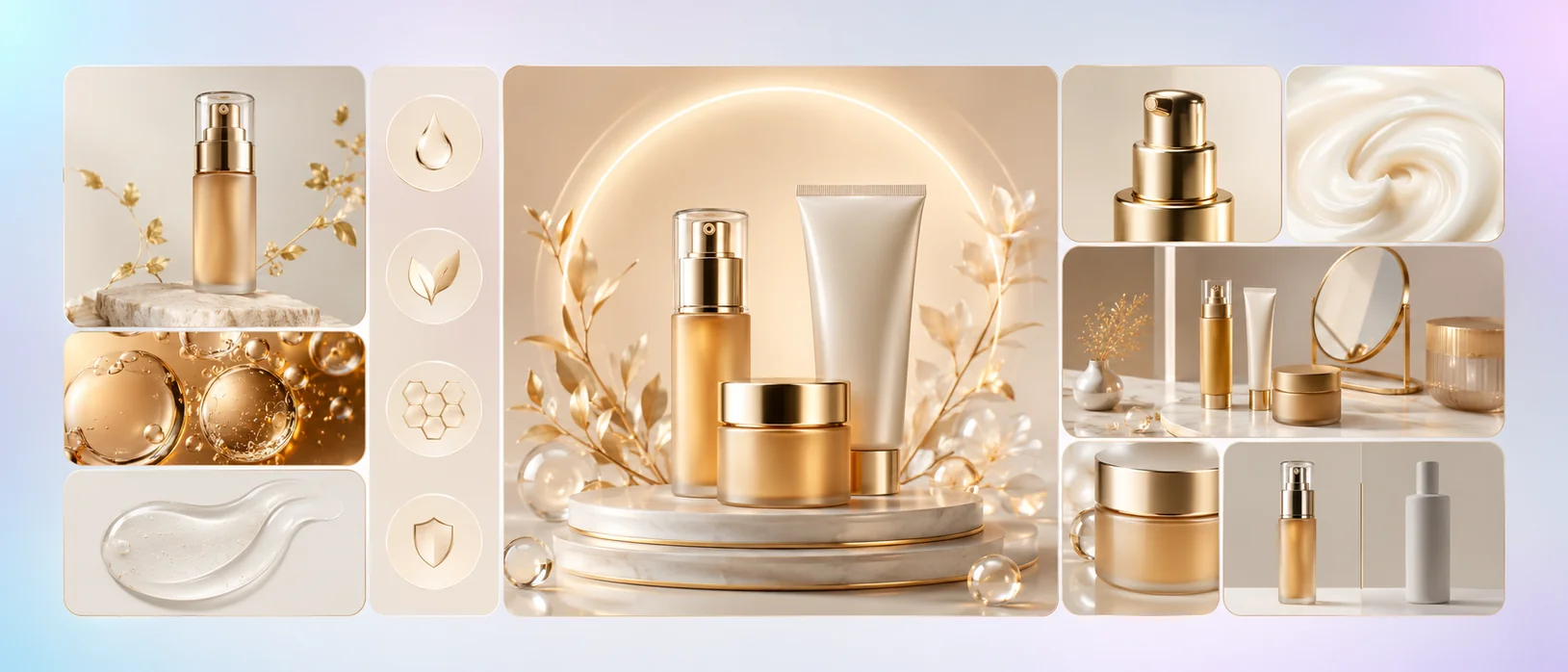
In Beauty, the buyer judges your brand before they read a single word. A serum at $12 and a serum at $48 can have near-identical formulas — what separates them in the buyer's mind is whether the listing looks like a premium brand or a private-label me-too. That perception happens in about 1.2 seconds, on a phone, and it decides both the click and whether your price feels justified.
"Not just pretty — it sells."
How clients describe Beauty listings that workThat's the exact tension in Beauty: the category demands visual polish, but polish for its own sake doesn't convert. The job isn't "make it beautiful." It's "make it read as a premium brand so buyers accept a premium price" — which is a conversion task measured in CVR and AOV, not a styling exercise. Here's how to build it.
Why Beauty Is a "Visuals-First" Category (and What That Means for CVR)
Beauty buyers can't test the product through the screen. They can't smell the cream, feel the texture, or see the shade on their own skin. So they substitute the only signal available: how premium and trustworthy the listing looks. This has direct CVR consequences:
- Perceived quality drives willingness to pay. A listing that signals "premium brand" lets you hold a higher price and convert at it. A listing that signals "generic" forces you to compete on price — collapsing margin in a category where margin is the whole game.
- Trust is a conversion gate. Buyers putting product on their skin or face need to trust the brand. Cheap-looking visuals read as "risky," and risk kills CVR.
- The shade/texture/result question must be answered visually. "What will this actually look like on me?" is the dominant Beauty objection. The listing that answers it converts; the one that doesn't loses the sale.
The strategic point for a brand manager: in Beauty, listing design isn't a cost center — it's a pricing lever. The premium read is what defends your price point against the wall of cheaper alternatives. Get it wrong and you're forced into a price war you didn't choose.
The DTC-to-Amazon Gap in Beauty (Read This If You're a Brand)
Here's the specific trap for brand-side teams. Your DTC Beauty creative is gorgeous — and it's built for the wrong environment.
"These guys actually get Amazon."
The gap isn't taste — it's platform contextOn your own site, your editorial photography and brand story work because the buyer is already in your world. On Amazon, the buyer is mid-comparison, on a phone, scanning a feed of competing serums, deciding in seconds. Your beautiful ambient hero shot — product floating in soft light, no scale, no context, no objection-handling — does brand work in an environment that rewards conversion work.
The gap isn't taste. Your in-house team has taste in abundance. The gap is platform context: knowing how a premium Beauty brand reads at thumbnail size, how to answer the shade/texture question in the image carousel, how to build A+ that converts instead of decorates, and how to stay TOS-compliant (Beauty has claim landmines). The brand stays intact; the conversion logic gets layered on. That's the difference between a listing that looks expensive and one that sells at an expensive price.
What Signals 'Premium Brand' in a Beauty Listing
Premium is a set of specific, executable cues — not a vibe. Build these:
TOS-compliant (pure white, 85%+ fill, no text/badges), mobile-readable. In Beauty, the main also has to telegraph premium through the product itself — packaging quality, finish, confident presentation. A premium-looking bottle on white beats a generic render every time, and it earns the click against the category wall.
The dominant Beauty objection is "what's it actually like?" Show the texture, the swatch, the consistency, the finish. A cream's richness, a serum's clarity, a lipstick's payoff. This is the single highest-converting Beauty image because it answers the question that stops the sale.
For color cosmetics: the full shade range, ideally on varied skin tones. For skincare: the result/outcome. Beauty buyers need to see themselves in the product — show the range so they self-identify and convert.
What's in it and why it matters — hero ingredients, concentrations, what they do. Beauty buyers are increasingly ingredient-literate; transparency signals a premium, credible brand. (Mind TOS — no drug/disease claims on cosmetics.)
A comparison infographic (no named competitors — TOS): your formulation, concentration, clean-ingredient status, or results vs the value tier. This justifies the premium price the rest of the listing is signaling.
Defuse "how does this fit my routine." Application steps, where it sits in a regimen, how often. Reduces both purchase doubt and post-purchase disappointment.
Clean-beauty certifications, cruelty-free, dermatologist-tested (if TOS-compliant and true), guarantee. Close the buyer who needs one more reason to trust an unfamiliar premium brand.
Every image both converts and reinforces premium. That dual job — handle the objection AND signal the brand tier — is what separates Beauty design that sells from Beauty design that just looks nice.
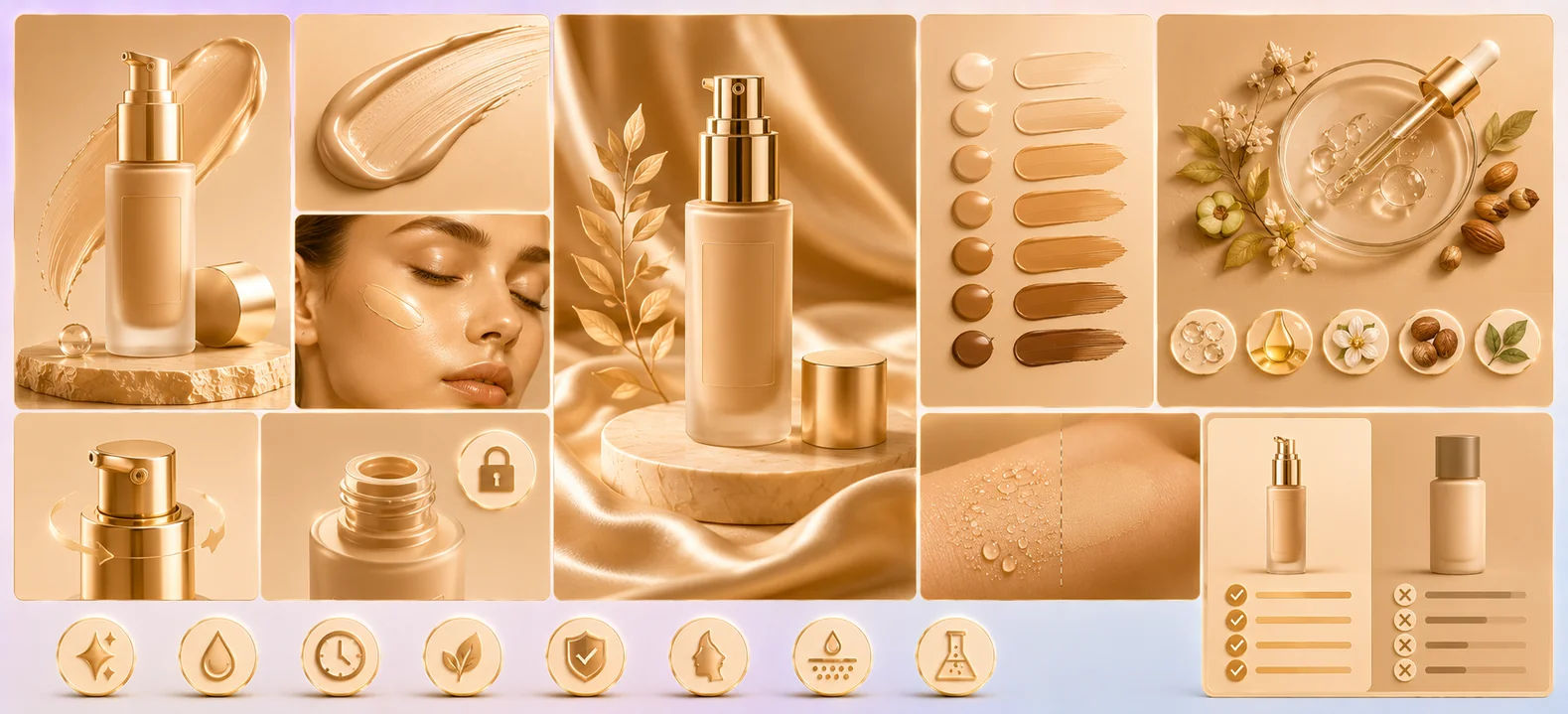
A+ Content: Where Beauty Premium Is Cemented
If you have Brand Registry, A+ is where the premium-brand read gets cemented and CVR gets its 8–15% lift. In Beauty, build for both conversion and brand tier:
- Ingredient/efficacy modules — hero actives, concentrations, the science, presented cleanly.
- Comparison chart — your formula vs the drugstore version, justifying the price.
- Routine/use modules — how the product fits a regimen, cross-selling your line.
- Brand credibility module — certifications, ethos as trust signal, not just poetry.
This is where a brand can finally use its equity — but framed as conversion-trust. In Beauty, A+ that looks premium and handles objections is what lets you hold the higher price at scale.
The Case: What 'Premium Read' Does to the Numbers
We've shipped listings in Beauty, and the pattern holds. Take a representative example — a skincare brand launching a serum at $38 (premium positioning) but with DTC-style ambient imagery dropped into Seller Central: a beautiful floating-bottle main, no texture shot, no shade/result imagery, no comparison. Early CVR stuck at 7%, ACOS climbing past 40% because the premium price wasn't being justified by the listing.
The buyer's read: "$38 for a bottle that looks like every other serum? I'll take the $15 one." The premium price and the generic-feeling listing were fighting each other.
The refresh: premium-signaling main, a texture/clarity image, results imagery, an ingredient module, and a comparison vs the drugstore tier. Result pattern in Beauty: CVR moving from ~7% toward 12–14%, which at a $38 AOV is a dramatic revenue swing — and critically, it let the brand hold the $38 price instead of discounting into a margin war. On a launch doing 15k sessions/month, that's the difference between a premium brand and a failed one.
"Traffic comes in, sales don't."
In Beauty, usually a premium-price / non-premium-read mismatchIn Beauty, that sentence usually means the price and the listing are misaligned — premium price, non-premium read. Fix the read, justify the price, convert.
The ACOS + AOV Connection (Why This Is a High-Value Investment)
Beauty's CPCs are competitive and its AOVs are often high, which makes the CVR math especially powerful:
- Higher CVR → lower cost per acquisition → lower ACOS on the same bids.
- A premium read → you hold a higher price → higher AOV → more revenue per converted session.
- Together: a premium listing lifts both the rate of conversion and the value of each conversion, compounding into stronger velocity, higher BSR, and less PPC dependence.
"Burning PPC, ACOS is climbing."
At a premium price point, often a justification problemIn Beauty, climbing ACOS at a premium price point is often a justification problem — the listing isn't earning the price. You can't bid your way to profit when the listing makes buyers feel the price is unjustified. The premium read is the lever.
This is loss aversion at a high-AOV stakes level: every bounced session in Beauty is a high-value loss, and the buyer who defaults to the cheaper competitor is a sale and a margin you've booked as lost.
Why Generic Design Caps Your Price in Beauty
"Hired someone on Fiverr for $80. The images looked nice but my conversion actually dropped."
Amazon seller forumIn Beauty, the cost of generic design isn't just lower CVR — it's a lower ceiling on your price. A listing that doesn't read as premium forces you to compete on price, permanently capping your margin in a category where premium positioning is the entire business model. And a generalist who doesn't know Beauty's TOS (cosmetic vs drug claims, prohibited efficacy language) can get a premium listing suppressed for a claim violation.
We're more expensive than Fiverr. For a brand manager, the comparison isn't $80 vs a package — it's $80 vs the margin you forfeit every month by being forced to price like a generic. A Beauty listing built to signal premium pays for itself in held price and lifted CVR, on every unit, indefinitely.
FAQ
- What makes an Amazon Beauty listing look premium?
- Specific, executable cues: a premium-signaling TOS-compliant main image that telegraphs packaging and finish quality, a texture/swatch image answering "what's it actually like," shade-range or results imagery, clean ingredient/efficacy presentation, a comparison vs the drugstore tier that justifies the price, and brand-credibility cues (certifications, cruelty-free). Each image both handles an objection and reinforces the premium brand tier.
- Why do listing images matter so much in Beauty and cosmetics?
- Beauty buyers can't test the product through the screen — they can't feel the texture or see the shade on their own skin — so they judge the brand by how premium and trustworthy the listing looks. That perception drives willingness to pay: a premium-looking listing lets you hold a higher price and convert at it, while a generic one forces a price war that collapses margin.
- What's the most important image for a cosmetics listing?
- After the main image (which wins the click), the texture/swatch image is the highest-converting Beauty image because it answers the dominant objection: "what's it actually like?" Showing the consistency, payoff, swatch, or finish resolves the question that otherwise stops the sale, directly lifting CVR.
- Should I reuse my DTC Beauty photography on Amazon?
- Not directly. DTC editorial and ambient photography works on your own site where the buyer is already in your world, but on Amazon the buyer is mid-comparison on a phone and needs objection-handling (scale, texture, shade, comparison) plus thumbnail readability. The brand stays, but the conversion logic and TOS-compliance (cosmetic vs drug claims) must be layered on.
- How does premium listing design affect my pricing and ACOS?
- A premium read lets you hold a higher price (higher AOV) while lifting CVR, which lowers cost per acquisition and ACOS on the same bids. Together, a premium listing raises both the rate and the value of each conversion — compounding into stronger sales velocity and higher BSR — whereas a generic listing caps your price and forces margin-eroding discounting.
Prove the premium read on your most important asset. Free.
Before committing to a full Beauty set, send your ASIN — we'll rebuild your main image at no cost: premium-signaling, mobile-first, TOS-compliant (including Beauty claim rules), on-brand. You see it before you commit to the full set or A+. If it doesn't beat your current image in a PickFu A/B against your category leader, you owe nothing — and you'll see exactly how the same premium logic carries through your carousel and A+.
Claim my free image →